
Saudi Arabia has become one of the fastest-growing travel destinations in the Middle East.
The country now welcomes millions of tourists, business travelers, and religious visitors every year.
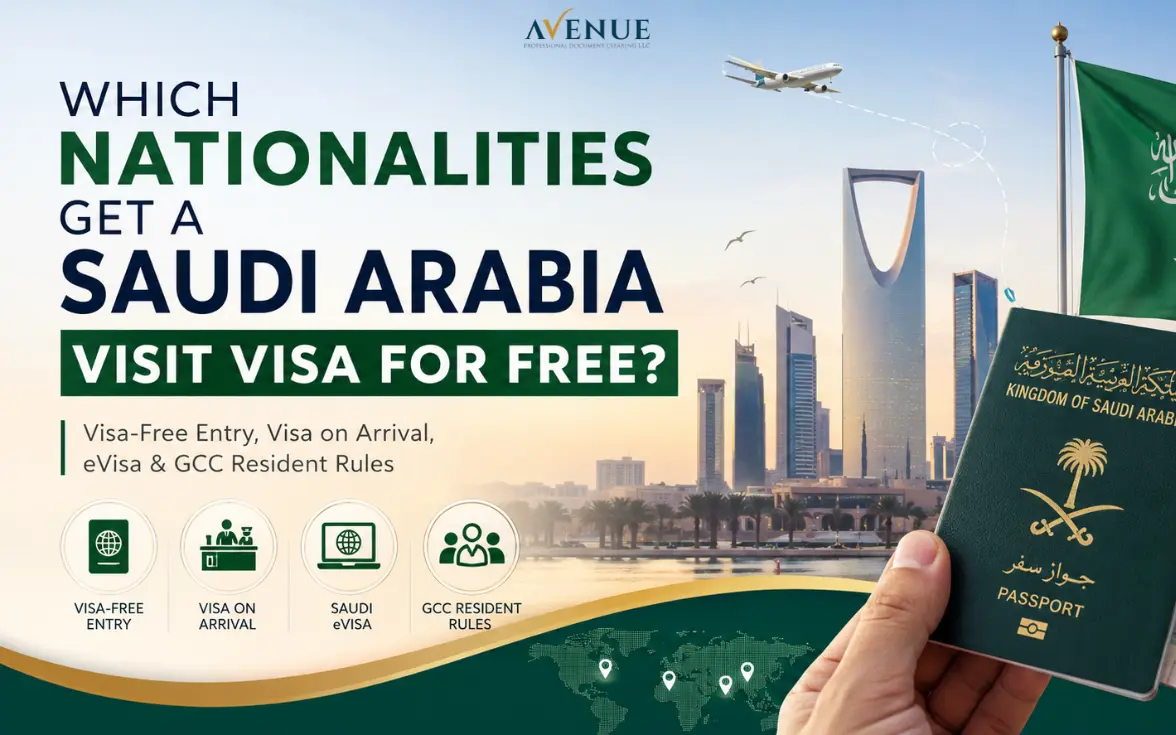
Because of recent tourism reforms, many travelers can now enter Saudi Arabia without a traditional embassy visa.
Some nationalities receive visa-free entry.
Others qualify for visa-on-arrival or online eVisa applications.
This guide explains:
- Who can enter Saudi Arabia without a visa
- Which countries qualify for eVisa
- Visa-on-arrival eligibility
- GCC resident rules
- Saudi visa requirements for UAE residents
- How to apply from Dubai
Saudi Arabia’s Visa Policy Explained
Saudi Arabia uses several entry systems depending on nationality, residency status, and travel purpose.
Travelers may qualify for:
- Visa-free entry
- Visa on arrival
- Saudi eVisa
- Transit visa
- Embassy-issued visit visa
Visa rules can change depending on diplomatic agreements and tourism policies.
Saudi Arabia introduced its tourism eVisa program to attract international visitors and support Vision 2030 economic goals.
The country now allows easier access for tourism, business meetings, events, and Umrah outside Hajj season.
Visa-free entry means travelers can enter without applying for a visa before travel.
Visa on arrival allows eligible travelers to obtain the visa at Saudi airports.
The Saudi eVisa system lets travelers apply online before departure.
Many UAE residents also qualify for simplified Saudi visa procedures.
Travelers from Dubai often choose professional visa support services to avoid delays and document issues.
If you travel frequently for business purposes, services related to Saudi business visa from Dubai can simplify the application process.
Saudi immigration authorities may still request:
- Passport validity
- Return tickets
- Hotel bookings
- Travel insurance
- Proof of funds
Always confirm the latest rules through official Saudi sources before travel.
Which Nationalities Can Enter Saudi Arabia Without a Visa?
Saudi Arabia currently allows visa-free access mainly for Gulf Cooperation Council citizens.
Citizens of GCC countries can freely enter Saudi Arabia using national ID cards or passports.
These countries include:
- United Arab Emirates
- Bahrain
- Kuwait
- Oman
- Qatar
This policy supports regional travel and economic cooperation between Gulf countries.
GCC citizens usually do not need:
- Tourist visas
- eVisas
- Visa-on-arrival approvals
However, entry conditions may still apply for specific situations.
Travelers should ensure:
- Identification documents remain valid
- No travel bans exist
- Entry purpose complies with Saudi regulations
Saudi Arabia may also introduce future visa exemptions for additional countries as tourism expands.
Many travelers confuse visa-free entry with visa-on-arrival eligibility.
They are different systems.
Visa-free entry means no visa process at all.
Visa on arrival still requires immigration approval and fee payment upon entry.
UAE residents who are not GCC citizens usually still require a visa.
However, many expats living in Dubai qualify for Saudi eVisa or visa-on-arrival access based on nationality or profession.
For updated assistance regarding Saudi Visa in Dubai applications, professional visa consultants can help determine eligibility quickly.
Travelers should avoid assuming old visa rules still apply.
Saudi immigration policies continue evolving rapidly.
Countries Eligible for Saudi Visa on Arrival
Saudi Arabia offers visa-on-arrival access to many travelers from Europe, North America, Asia, and Oceania.
Eligible travelers can usually obtain their visa at:
- Saudi international airports
- Certain land borders
- Approved seaports
Visa-on-arrival eligibility often includes travelers from:
- United States
- United Kingdom
- Canada
- Australia
- Japan
- South Korea
- Most Schengen countries
Requirements generally include:
- Valid passport
- Return ticket
- Accommodation details
- Travel insurance
- Visa fee payment
The visa-on-arrival system reduces embassy paperwork and speeds up tourism entry.
Travelers should still expect immigration checks upon arrival.
Entry approval is never fully guaranteed until immigration clearance is completed.
Saudi Arabia also allows visa-on-arrival access for certain GCC residents holding approved professions.
This option benefits many expatriates living in Dubai and other UAE emirates.
Profession-based approvals may depend on:
- Residency validity
- Occupation category
- Passport nationality
Before traveling, applicants should verify current eligibility rules because approved professions sometimes change.
Many travelers still prefer applying online before departure to reduce airport waiting times.
The Saudi eVisa process is often faster and more predictable than visa-on-arrival processing.
Important Notes About Visa on Arrival
Visa-on-arrival travelers should prepare all supporting documents before boarding their flight.
Airlines may deny boarding if passengers cannot prove Saudi entry eligibility.
Travel insurance is usually mandatory.
Passports generally require at least six months validity.
Some travelers mistakenly assume all UAE residents qualify automatically.
Eligibility depends on nationality and immigration status.
Business travelers attending meetings or exhibitions may need different visa categories depending on visit purpose.
Travelers planning Umrah outside Hajj season can often use tourist visas if eligible.
During peak religious periods, additional restrictions may apply.
Always verify updated Saudi immigration announcements before travel dates.
Saudi eVisa Eligible Countries
Saudi Arabia’s eVisa platform supports travelers from many countries worldwide.
The online process allows visitors to apply before travel without visiting an embassy.
Applicants complete:
- Online forms
- Passport uploads
- Insurance payments
- Visa fee payments
The Saudi eVisa commonly permits tourism, leisure travel, events, and Umrah outside Hajj season.
Eligible countries include many from:
- Europe
- North America
- East Asia
- Australia and New Zealand
Processing times are often fast.
Many approvals arrive within a few days.
The eVisa system reduced processing barriers for international visitors and increased tourism growth significantly.
Travelers applying from Dubai should ensure:
- UAE residence visas remain valid
- Passport details match exactly
- Uploaded documents are clear
Incorrect information may lead to delays or rejection.
Professional support services can help travelers avoid application mistakes and improve approval chances.
Saudi immigration systems are highly digitalized.
Even small document inconsistencies may create issues during approval checks.
Benefits of the Saudi eVisa System
The Saudi eVisa system offers several advantages compared to traditional embassy applications.
Benefits include:
- Faster processing
- Online application access
- Reduced paperwork
- Multiple-entry options
- Tourism flexibility
Applicants can often complete the process from home within minutes.
This is especially useful for Dubai residents planning short business or leisure trips.
Travelers should still apply early during busy travel seasons.
Peak religious holidays and tourism periods may increase processing times.
Can GCC Residents Enter Saudi Arabia Without a Visa?
GCC citizens can enter Saudi Arabia without visas.
However, GCC residents who are expatriates follow different rules.
Many UAE residents living in Dubai qualify for:
- Saudi eVisa
- Visa on arrival
- Simplified visit visa applications
Eligibility depends on:
- Nationality
- Profession
- UAE residency validity
Saudi authorities often approve visa-on-arrival access for GCC residents working in professional sectors such as:
- Engineering
- Healthcare
- Information technology
- Management
- Finance
Applicants usually need:
- Valid UAE residence visa
- Passport with six months validity
- Proof of profession
Rules may vary depending on immigration updates.
Travelers should avoid booking non-refundable flights before confirming eligibility.
Saudi Arabia continues expanding tourism access to GCC residents because of strong regional travel demand.
Many Dubai residents visit Saudi Arabia for:
- Tourism
- Religious travel
- Business events
- Family visits
Professional visa services help applicants identify the fastest visa route based on their profile.
GCC Resident Entry Tips
GCC residents should ensure residency visas remain active throughout travel dates.
Expired or soon-to-expire UAE visas may cause rejection.
Travelers should also carry:
- Emirates ID
- Employment proof
- Hotel confirmations
- Return tickets
Immigration officers may request additional verification documents during entry checks.
Applying online before travel often reduces airport delays.
Saudi Transit Visa Rules
Saudi Arabia introduced transit visas to encourage stopover tourism.
Travelers transiting through Saudi airports may qualify for short-term entry access.
Transit visas are useful for passengers connecting through airlines such as:
- Saudia
- Flynas
Transit travelers may receive permission to stay in Saudi Arabia for limited periods before continuing onward journeys.
This option encourages tourism in cities such as:
- Riyadh
- Jeddah
- AlUla
Transit visa rules can include:
- Confirmed onward flight
- Eligible airline booking
- Limited stay duration
Some transit visas include complimentary travel insurance.
Travelers should carefully review airline-specific eligibility rules before booking.
Transit programs continue evolving as Saudi Arabia expands global tourism partnerships.
Saudi Visit Visa Requirements for UAE Residents
Saudi visa requirements for UAE residents depend on nationality and visa category.
Common required documents include:
- Valid passport
- UAE residence visa
- Passport photographs
- Return flight ticket
- Hotel booking
- Travel insurance
Business travelers may additionally require:
- Invitation letters
- Company documents
- Meeting confirmations
Religious travelers planning Umrah may need additional approvals during peak periods.
Saudi immigration officers can request extra documentation depending on individual cases.
Applicants should ensure all details remain consistent across documents.
Name mismatches are a common rejection reason.
Dubai residents often choose professional visa consultants to reduce application errors and speed up processing.
Using expert support can help travelers avoid unnecessary delays.
Processing Time Expectations
Saudi visa processing times vary based on nationality and application type.
eVisas are usually the fastest option.
Embassy-issued visas may require additional review.
Travel seasons can also affect approval speed.
Applicants should avoid last-minute submissions whenever possible.
How to Apply for a Saudi Visa from Dubai
Applying for a Saudi visa from Dubai is now much easier than before.
The process usually includes:
- Determining eligibility
- Choosing the visa category
- Preparing documents
- Submitting the application
- Paying fees
- Receiving approval
Travelers can apply through:
- Official Saudi portals
- Authorized visa agencies
- Professional immigration consultants
Applicants should select the correct visa category carefully.
Tourist visas, business visas, and family visit visas all have different requirements.
Incorrect category selection may lead to rejection.
Many applicants prefer using professional services because Saudi immigration systems require accurate document formatting and information matching.
Businesses sending employees to Saudi Arabia often use specialized support for faster processing.
Why Accurate Documentation Matters
Saudi visa systems verify information digitally.
Even small spelling errors can create delays.
Applicants should double-check:
- Passport numbers
- Residency details
- Travel dates
- Employer information
Professional visa support helps reduce avoidable mistakes.
This is especially important for urgent business travel.
Common Reasons Saudi Visa Applications Get Rejected
Saudi visa rejections usually occur because of document or eligibility issues.
Common reasons include:
- Incomplete applications
- Invalid passport validity
- Incorrect personal information
- Profession mismatch
- Poor document scans
- Immigration history concerns
Applicants sometimes upload unclear passport copies or inconsistent information.
These mistakes can delay approvals significantly.
Travelers should review all submissions carefully before payment.
Using experienced visa consultants may reduce rejection risk.
Saudi authorities continue strengthening digital verification systems.
Accurate documentation matters more than ever.
Why Use a Professional Saudi Visa Service in Dubai
Saudi visa rules change frequently.
Professional visa support services help travelers stay updated and avoid costly mistakes.
Benefits include:
- Faster application handling
- Eligibility checks
- Document review
- Reduced rejection risk
- Business visa support
- Urgent processing guidance
Dubai residents often prefer professional support because of changing Saudi immigration policies.
This is especially helpful for:
- Business executives
- Families
- First-time travelers
- GCC residents with profession-based eligibility
Experienced consultants can identify the best visa option based on nationality, travel purpose, and urgency.
Conclusion
Saudi Arabia now offers easier entry options for international travelers than ever before.
Depending on nationality and residency status, travelers may qualify for:
- Visa-free entry
- Visa on arrival
- Saudi eVisa
- Transit visa programs
Dubai residents should always confirm current eligibility before travel because Saudi immigration rules continue changing.
Accurate documentation and proper visa selection help avoid delays and rejection risks.
For reliable assistance with Saudi business visa from Dubai and Saudi Visa in Dubai applications, professional support services can simplify the entire process.